Maggot Infestation : Various Treatment Modalities
- Lentera Tani Indonesia
- Aug 13, 2021
- 2 min read

Updated: Aug 16, 2021
Create a blog post subtitle that summarizes your post in a few short, punchy sentences and entices your audience to continue reading.
The invasion of the skin and subcutaneous tissue by the larvae (Maggot) is known as Maggot infestation. It was found that farmers who are working in agricultural fields are more prone to this infestation. A case of 60 year old male patient with ulceration on leg for 10 days which was initially smaller and later developed into a larger wound, due to maggot larvae. This case report illustrates the importance and method of treating this cutaneous myiasis.
Maggot infestation is a condition in which the fly maggots feed off and develop in the tissues of living organisms.
True myiasis results from flies deliberately laying eggs in or on the tissues. There are two forms of myiasis: obligate, in which it is necessary for the maggots to feed on living tissues and facultative, where flies opportunistically take advantage of wounds or degenerative necrotic conditions as a site in which to incubate their larvae.1 In general obligate myiasis of humans is topical in origin, whereas facultative myiasis can occur anywhere in the world. Majority of flies that are likely to cause myiasis in humans belong either to the blowfly group, family calliphoridae, or the housefly group, family muscidae. Most species causing facultative myiasis in humans are not pathogenic which is why some are used in larval therapy, while obligate parasites range from the essentially begin to the potentially lethal.
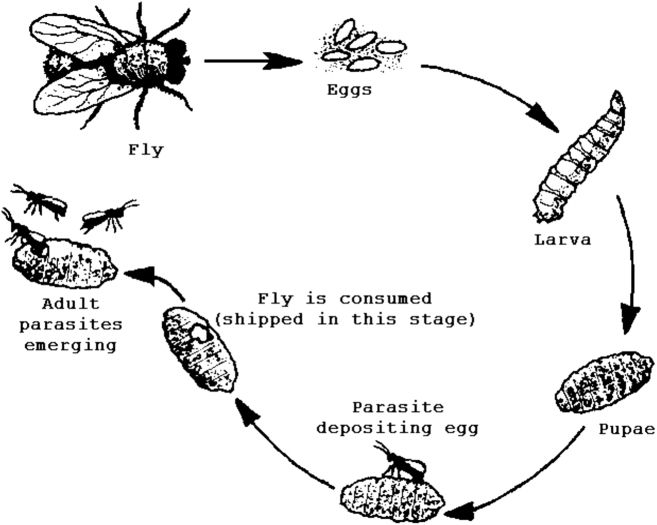
Life Cycle of Maggot
Female flies may visit wounds to feed or to lay eggs. They generally lay 50–300 eggs at a time and at skin temperature these hatch around 8–12 hours later. The eggs are about 1.7 mm long and the emerging larvae are about the same length but less easy to detect. Once emerged they grow rapidly, within 24 hours at human skin temperature they grows up to 7–8.5 mm long and in only 50–60 hours they attain full growth. They then stop feeding and migrate from the tissue to seek a dry crevice or soil in which to pupate (life stage in which it attains maturation). In all cases this is self-linking, determine only by the temperature and the availability of food. Insects in this group normally only take necrotic tissue and slough and it is rare to find them debriding viable tissue.
Source : https://www.ncbi.nlm.nih.gov/pmc/articles/PMC6161638/
Comments